



MapQuest: Get Directions review
 Analysis by GetAllApps
I reach for MapQuest: Get Directions when I want a familiar map and turn-by-turn guidance without paying to get started. It is a navigation app from MapQuest, and its focus is practical: plan a route, follow directions, and keep an eye on traffic while travelling. In everyday use, that combination makes it useful for routine drives as well as unfamiliar trips, though it is worth learning how you prefer to plan before relying on it for every journey.
From a destination search to a usable route
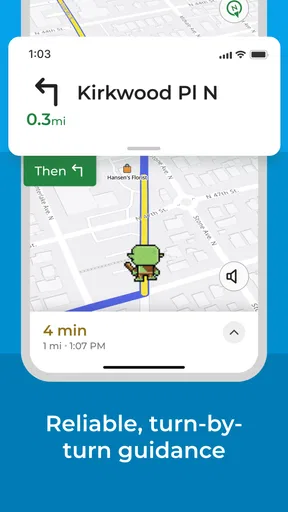
The simplest way to use the app is to enter where you are going, review the route, and follow the navigation prompts. Voice guidance means I can keep my attention on the road instead of repeatedly checking the screen. The map remains valuable before setting off, when I want to understand the shape of the trip and spot whether the suggested path looks sensible.
A realistic example is a weekend errand across town: I can check the route before leaving, notice whether traffic may affect the drive, and then let voice navigation handle the turns. That is a more useful habit than waiting until I am already moving to decide where to go. I also recommend checking the destination spelling or address before starting, especially when several places have similar names.
MapQuest is most helpful when the destination is clear and the main task is getting there by car. It combines maps, GPS guidance, voice directions, and live traffic in one place, so I do not need to treat route planning and navigation as entirely separate jobs. Still, I would review the proposed route before departure rather than assume that the first option is automatically the best one for my preferences.
For a longer drive, I find it sensible to think of the map as a planning aid as well as a navigation screen. Before setting off, identify the broad direction of travel and any major turns that could be easy to miss. That small check gives me context if traffic changes the route or I need to understand where I am relative to the destination.
Settings that shape the trip
Navigation is more comfortable when the app’s settings match the way you actually travel. Before relying on it regularly, take a moment to inspect the available preferences and make sure voice guidance and map presentation suit you. A setting that works well on a quiet local drive may feel different in busy traffic, where clear spoken prompts can be more useful than glancing at the screen.
I would also check that the phone can provide location information and that the app has what it needs to guide you. If the position on the map seems wrong, first make sure the device has a clear view of its surroundings and that location access is available. These basic checks are more useful than repeatedly changing the destination or restarting a route without understanding the cause.
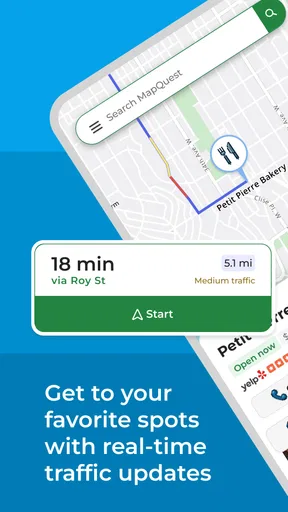
Live traffic is especially helpful when treated as a changing view of the trip, not a promise that the route will stay clear. Conditions can shift, so I would check traffic before departure and pay attention to guidance during the drive. If the route changes, follow the spoken instructions only when it is safe to do so; never try to investigate a map while moving.
Because this is a navigation app, a reliable phone setup matters. Keep the device secured where you can hear the prompts and avoid handling it while driving. If you are travelling somewhere unfamiliar, entering the destination and reviewing the route while parked reduces last-minute distractions. These habits are simple, but they make the difference between using navigation as support and letting it compete for your attention.
Repeatable habits that save time
The fastest workflow is usually the one you can repeat: choose the destination before leaving, scan the route, start guidance, then let voice prompts handle the details. I avoid making destination searches a moving-vehicle task. If plans change, pull over safely before editing the route; that is both calmer and more reliable than trying to type at a junction.
For recurring trips, consistency helps more than complicated planning. Use the same naming or address-search approach that has worked for you, and confirm the final destination before beginning. A useful practical check is to compare the destination shown on the map with the place you intend to visit, particularly when you are going to a large venue or an area with multiple entrances.
Another good habit is to check traffic at two different moments: once while planning and again shortly before departure if there has been a delay. This does not guarantee a faster trip, but it can prevent leaving with an outdated expectation. I also like to glance at the route’s overall shape before driving, because recognizing a major turn or highway transition makes the spoken instructions easier to interpret.
MapQuest can be a straightforward choice for someone who wants an all-in-one driving tool rather than a separate map for planning and another app for directions. Compared with the familiar alternatives in this category, the practical question is less about whether an app can draw a route and more about which interface, traffic presentation, and guidance style feels easiest to trust. If another navigation app already fits your habits better, there may be little reason to switch just for a similar core task.
Where it fits—and where it does not
The app is a good fit for drivers who want route guidance and traffic information in one place, especially if they prefer spoken directions to frequent screen checks. It is also approachable for occasional users: you can use it for a single unfamiliar trip without building a complicated planning routine. MapQuest is free to install, with optional in-app purchases ranging from $1.99 to $39.99 per item, so I would check the purchase details in the app store before choosing anything beyond the free experience.
It may not be the right choice for someone who needs a specialized navigation workflow or has already built a dependable routine around another service. If you mainly travel on foot or by public transport, a driving-focused approach may not match your needs. Likewise, anyone who expects navigation to remove the need for judgment should reconsider: road signs, closures, safe driving, and local conditions still matter more than a suggested line on a map.
There is also a real trade-off in relying on a phone for navigation. The app can guide you, but your experience depends on the device being usable and able to establish your location. I would not treat a route display as a substitute for preparing before a long or unfamiliar drive. Check where you are going, start with enough time, and be ready to make safe decisions if the road situation differs from what the map suggests.
The app is rated for Everyone, and its long-running presence makes it a familiar option in the category: it was released on February 15, 2011, and the current version is 10.30.0. It supports devices running Android 7.0 or later. MapQuest has an average rating of 4.4 from around 76,000 ratings, alongside roughly 25,000 written reviews, and it has been installed over 10 million times. Those figures suggest broad use, but they should not replace checking whether its interface suits your own driving routine.
Learning the limits before you depend on it
My main advice is to use the app in a low-pressure setting first. Try a familiar trip, listen to how the voice prompts arrive, and see whether the map is easy to read from your normal phone position. That gives you a chance to adjust your habits before a complicated drive. If a direction seems inconsistent with a road sign or the conditions in front of you, trust the real-world situation and proceed safely.
Traffic information is useful for awareness, but it cannot predict every delay or guarantee that a suggested route will be best for every driver. A route that looks efficient on a screen may not match your comfort with busy roads or unfamiliar turns. When that distinction matters, compare the route carefully before setting off and choose the path you are prepared to follow.
MapQuest is also not a reason to interact with your phone while driving. Set the destination while parked, secure the device, and rely on audio prompts where possible. If you need to change plans, stop somewhere safe first. These are not special tricks; they are the repeatable practices that make any navigation app more useful and reduce avoidable distractions.
A practical choice for drivers who like a simple routine
I would recommend MapQuest to someone looking for a free starting point for maps, driving directions, voice guidance, and live traffic, especially if they want to prepare a route and then follow it with minimal screen interaction. Its strongest everyday use is a predictable sequence: confirm the destination, review the route, start guidance, and let the app support—not replace—your attention to the road.
I would skip it if you need a different kind of travel planning, already prefer another navigation app, or expect traffic guidance to make every route effortless. For the right driver, though, it is a sensible option with a clear purpose. My recommendation is to try it on a familiar trip first, learn how its prompts and map work for you, and then decide whether it deserves a place in your regular driving routine.
Pros and cons
Pros
- Voice-guided navigation helps keep your eyes on the road.
- Offline maps are available for areas you download in advance.
- Route options can account for toll roads and highways.
- Live traffic updates can help you avoid slowdowns.
- The app supports directions for driving walking and cycling.
Cons
- Offline map downloads require storage space on your device.
- Traffic updates depend on an active internet connection.
- Some routes may be less accurate in rural areas.
- The interface can feel crowded with ads and map details.
- Battery use may rise during long trips with navigation enabled.


